
EPM Versus ERP Systems for Better Decisions
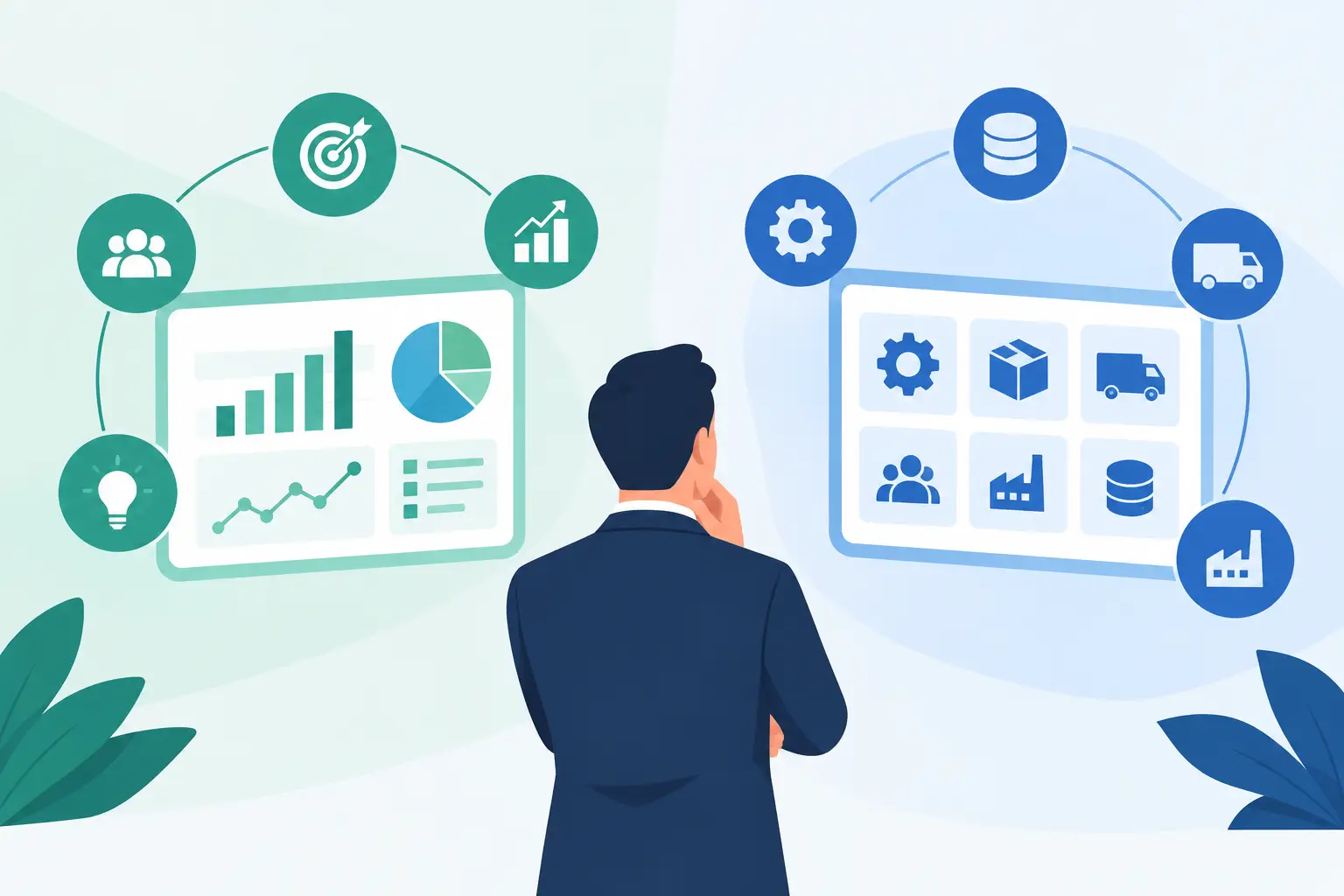
A leadership team can close the books on time and still lack the information needed to make the next major decision. That gap is where the distinction between EPM versus ERP systems becomes material. ERP records and controls the business as it operates. EPM helps management interpret that performance, plan for what comes next, and hold the organization accountable to its financial goals.
For growing and mid-market companies, the question is rarely whether one platform is universally better. The more useful question is whether the current finance technology stack supports the level of planning, visibility, and decision-making the business now requires. A company preparing for an acquisition, managing multiple entities, expanding its operating footprint, or responding to private equity expectations may need both systems working in concert.
EPM versus ERP systems: different jobs in finance
Enterprise resource planning, or ERP, is the system of record for core business transactions. It typically manages general ledger activity, accounts payable and receivable, purchasing, inventory, order management, payroll data, fixed assets, and other operational processes. Its primary strength is control: consistent processes, standardized data, and traceability from a reported number back to the underlying transaction.
Enterprise performance management, or EPM, sits closer to the management process. It is designed for budgeting, forecasting, scenario modeling, management reporting, financial consolidations, KPI analysis, and workforce or operational planning. An EPM platform takes actual results from the ERP and other source systems, then gives finance a structured environment to model assumptions, compare performance to plan, and communicate the implications to leadership.
The distinction matters because an ERP can produce a historical financial report without making forecasting easy. Likewise, an EPM platform can support sophisticated planning, but it should not be asked to replace the transaction processing and control structure of a well-managed ERP.
What an ERP system is built to do
ERP systems are operational by design. When a company issues an invoice, receives inventory, approves a purchase order, or records a journal entry, the ERP captures the event and applies defined rules. This creates a dependable foundation for accounting accuracy, compliance, cash management, and period-end close.
For a finance organization, a well-configured ERP reduces manual work and creates greater discipline across departments. It can standardize the chart of accounts, establish approval workflows, improve entity-level reporting, and make it easier to reconcile data. Those capabilities become especially valuable as transaction volume rises and spreadsheets can no longer provide adequate control.
However, ERP reporting often reflects how transactions were configured, not necessarily how executives want to manage the business. A CFO may need to view gross margin by customer segment, forecast cash under several sales scenarios, or understand the earnings impact of a hiring plan. These analyses can be difficult to create, govern, and update inside an ERP alone, particularly when inputs come from CRM, HR, operational, and external market data.
Where EPM adds strategic value
EPM is built around forward-looking finance. It gives FP&A and operating leaders a common structure for building a budget, refreshing a forecast, and evaluating performance against a plan. Instead of circulating disconnected spreadsheet versions, teams can work from defined drivers, approved assumptions, workflow controls, and a centralized model.
This has a direct impact on the quality and speed of decision-making. If sales conversion, utilization, commodity costs, headcount, or production volume changes, finance can assess the likely effect on revenue, margin, EBITDA, liquidity, and covenant compliance. Management can then choose a response before the impact appears in a month-end report.
EPM also improves accountability. When KPIs, targets, and actual results are aligned within a consistent reporting framework, business leaders spend less time debating whose numbers are correct. The conversation can move to what changed, why it changed, and what action is needed.
That said, an EPM implementation is not automatically a cure for weak planning. If the company lacks a clear planning calendar, reliable KPI definitions, ownership for assumptions, or a disciplined forecast process, the technology may simply make an unclear process more visible. The operating model needs to be designed alongside the system.
How the systems work together
The strongest finance architecture usually treats ERP and EPM as complementary. The ERP supplies governed actuals. EPM uses those actuals as the baseline for plans, forecasts, consolidations, variance analysis, and management reporting. Data may also flow from CRM, payroll, HRIS, production systems, and operational platforms into EPM, depending on the business model.
Consider a multi-location services company. Its ERP may provide accurate revenue, labor expense, vendor spend, and balance sheet data by legal entity. Its EPM platform can then model staffing needs by location, project utilization, pricing changes, and pipeline conversion to produce a rolling forecast. The ERP answers, “What happened?” EPM helps answer, “What is likely to happen, and what should we do about it?”
Integration should be purposeful rather than exhaustive. Pulling every available field into a planning platform can create unnecessary complexity and weaken confidence in the model. Finance should identify the data drivers that materially affect performance, define transformation rules, assign data ownership, and establish reconciliation routines between systems.
When an ERP upgrade should come first
An ERP initiative may be the priority when the company has fundamental transaction or control issues. Warning signs include excessive manual journal entries, delayed closes, unreliable account reconciliations, fragmented entity data, inconsistent revenue recognition, and dependence on separate systems for core accounting processes.
In those circumstances, adding EPM too early can create a polished planning layer on top of unreliable data. Finance may still spend each month reconciling actuals before it can produce a forecast. Strengthening the ERP foundation, chart of accounts, master data, close process, and reporting dimensions often delivers the more immediate return.
There are exceptions. A business may have a functional ERP but an urgent need for investor-ready forecasting during a transaction, turnaround, or rapid growth period. In that case, a targeted planning solution and an interim data process may be justified while broader ERP improvements proceed in phases. The appropriate sequence depends on risk, timing, data quality, and the decisions leadership needs to make.
When EPM should move to the front of the roadmap
EPM becomes a priority when planning has become a bottleneck. Common indicators include annual budgets that take months to complete, forecasts that are outdated upon delivery, multiple spreadsheet versions with conflicting assumptions, and management reports that require extensive manual assembly.
It is also a strong fit when leaders need more frequent scenario analysis. Private equity-backed companies, for example, may need a credible operating plan, weekly liquidity visibility, monthly forecasting discipline, and clear bridges from actual results to budget and prior period performance. Growth-stage companies may need to connect hiring and sales plans to cash runway before committing to expansion.
The value case should not rest only on time saved. Better EPM processes improve the quality of capital allocation, resource decisions, performance accountability, and executive communication. Those outcomes can be more significant than reducing the number of hours spent consolidating spreadsheets.
Questions leaders should ask before selecting either system
Technology selection should begin with a finance transformation agenda, not a product demonstration. Leadership should be able to articulate which decisions are currently too slow, which reports are not trusted, and which processes create unnecessary risk. A clear answer prevents the organization from buying features that do not solve its most pressing problem.
Finance should also decide what level of complexity it can sustain. A platform that requires extensive technical support, custom development, and specialized administration may be appropriate for a large organization with mature resources. It may be a poor fit for a lean finance team that needs practical reporting and forecasting within a defined timeline.
Implementation capacity matters as much as software capability. The work typically includes redesigning processes, cleaning data, documenting requirements, testing integrations, training users, and establishing governance after go-live. Senior sponsorship is essential because planning and reporting changes affect operating leaders, not just the finance team.
The best result is not an ERP or EPM system with the longest feature list. It is a finance environment that gives leaders trusted actuals, a credible view of the future, and enough discipline to act on both. Start by identifying the decisions the business must make better over the next 12 to 24 months, then build the process and technology roadmap around them.
Related Articles

12 Profitability Reporting Questions Leaders Need
The profitability reporting questions leaders should ask to reveal margin drivers, improve accountability, and make better growth decisions at scale now.

Annual Plan Versus Rolling Plan for Growth
Annual plan versus rolling plan: compare control, agility, resources, and forecast accuracy to choose the planning model that supports disciplined growth.

Cash Forecasting Versus Profit Forecasting for Growth
Cash forecasting versus profit forecasting reveals different risks. Learn how leaders use both to protect liquidity, margins, and growth at scale.